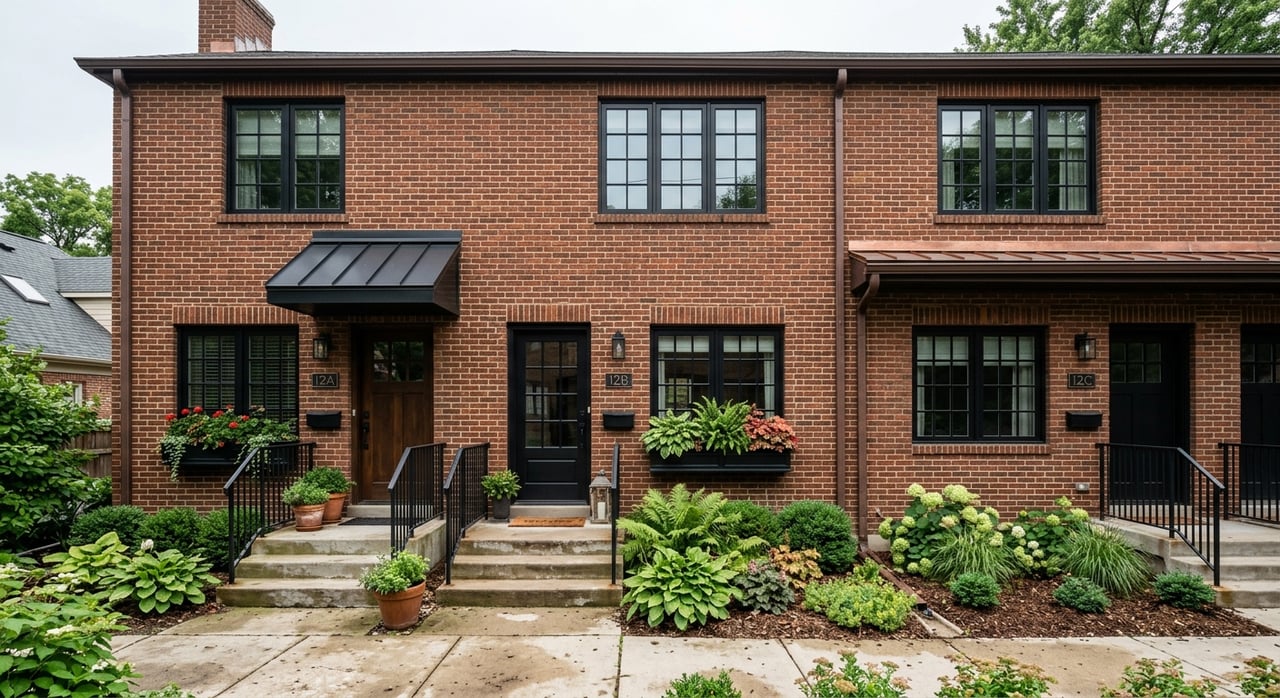
Skokie Condos And Townhomes: A Practical Buyer Guide
July 9, 2026
July 9, 2026
Wondering whether a condo or townhome in Skokie is the better fit for your next move? You are not alone. Many buyers like Skokie because it can offer a more accessible entry point than some nearby suburbs, along with solid day-to-day convenience. In this guide, you will get a practical look at pricing, property types, HOA details, financing checkpoints, and what to compare before you make an offer. Let’s dive in.
Skokie stands out because it offers a broad mix of attached housing in a well-connected inner-ring suburb. Based on CMAP housing profile data, Skokie has a meaningful share of multi-unit housing, and its median housing stock dates to 1959. That older housing mix helps explain why you will find mid-century condo buildings, elevator buildings, smaller walk-ups, and townhouse pockets instead of a market dominated by newer large-lot subdivisions.
Convenience is also a big part of the story. Skokie has a Walk Score of 68, CTA Yellow Line service, Pace buses, I-94 access, and more than 45 miles of bike paths and routes. If you want easier errands, commuting options, and less dependence on a single-car routine, those factors can add real value.
The market is also active. As of July 6, 2026, Redfin shows 29 condos for sale at a median listing price of $300,000 and 8 townhouses for sale at a median listing price of $399,000. Redfin also describes the broader Skokie market as very competitive, with homes selling in about 42 days and receiving about 4 offers on average.
For many buyers, the first practical question is cost. Current listing data suggests condos in Skokie often sit at a lower entry price than townhomes, which is not surprising given the usual tradeoff between square footage, private space, and building type. If your budget is tight, a condo may open the door to Skokie sooner.
Townhomes usually ask more because they often include features that feel more house-like. That can mean extra levels, attached garages, finished basements, or outdoor space such as a patio or balcony. If you want more room to spread out without moving to a detached home, that price difference may feel worthwhile.
Here is a simple snapshot of the current attached-home market in Skokie.
| Property type | Current listings | Median listing price |
|---|---|---|
| Condos | 29 | $300,000 |
| Townhouses | 8 | $399,000 |
Skokie also compares favorably with some nearby suburbs on entry point. Redfin reports a recent median sale price of $449,731 in Skokie, compared with $474,716 in Morton Grove, while CMAP lists Skokie’s 2023 median housing value at $358,600 versus $475,400 in Lincolnwood. In practical terms, Skokie often gives buyers a more condo-friendly and lower-entry-price option than more detached-home-oriented nearby markets.
Skokie condos currently span about 725 to 1,800 square feet. Common layouts include 1-bedroom, 1-bath units, 2-bedroom, 2-bath units, and some larger 3-bedroom, 2-bath options. That gives you a fairly broad range whether you are buying your first place, downsizing, or looking for a simpler maintenance profile.
Features in current listings often include in-unit laundry, private balconies, elevator access, walk-in closets, and updated kitchens. One useful detail for buyers is that these features are not limited to top-tier listings. You can often find everyday convenience features in mid-market inventory too.
That said, condos usually involve a tradeoff. In many cases, you may get lower ownership complexity and a lower purchase price, but less private space and fewer house-style features. If you value lock-and-leave ease and a simpler footprint, that tradeoff can work in your favor.
The list price is only part of your budget. Monthly assessments can vary widely from building to building, and what they cover matters just as much as the amount. A lower-priced condo with a high assessment can change your monthly payment picture quickly.
You will also want to understand whether the building is planning major work. Upcoming capital projects, reserve levels, and any history of special assessments can shape your true cost of ownership. These are not minor details. They can affect both affordability and resale.
Skokie townhomes currently range from about 1,035 to 2,161 square feet, with many listings offering 2 to 3 bedrooms. The feature set tends to lean more toward attached garages, private patios or balconies, finished basements, and 3-level living. If you want more separation between living, sleeping, and work space, a townhome may feel closer to a single-family layout.
Townhomes can also vary more than buyers expect. Some may have HOA fees and shared rules, while others may offer no HOA at all. Current listing examples in Skokie show exactly that range, including one townhome advertised with no HOA and rental permission, while a condo listing shows a $489 monthly HOA.
This is why attached housing should never be treated as one category. Two properties with similar prices can come with very different fee structures, maintenance obligations, rental policies, and ownership rules. Before you compare values, make sure you are comparing the full ownership picture.
If you need extra storage, a dedicated office area, or a garage, townhomes often check more of those boxes. The added square footage can make a noticeable difference if you are working from home, sharing space, or planning to stay put for several years. More room can also make the home feel usable in more phases of life.
The tradeoff, of course, is cost. You may pay more up front, and in some communities you may still have HOA rules or shared expenses. The right choice depends on whether you value a smaller monthly budget or more daily flexibility.
In Skokie, the smart questions are often about the association, not just the unit. Illinois condo law requires boards to prepare annual budgets and provide reasonable reserves for capital expenditures and deferred maintenance, unless that reserve requirement is waived by a two-thirds vote. If reserves have been waived, that must be disclosed in bold in the resale disclosure materials.
Illinois law also requires resale disclosures to include core association documents and financial information. That includes the declaration, bylaws, rules, lien and assessment status, anticipated capital expenditures, reserve information, and the last available financial statement. These documents can tell you a lot about how the property is run.
Here are practical questions to ask before you move forward:
These questions matter because special assessments can affect your budget fast. Illinois guidance says a board may generally adopt a special assessment without unit-owner approval, though owners can petition to reject it if the board action pushes regular and special assessments above 115% of the prior-year total. Similar annual accounting and budget frameworks also apply under the Common Interest Community Association Act, which often governs townhome HOAs.
Many buyers assume financing depends only on their income, credit, and down payment. With attached housing, the project itself can matter too. HUD states that FHA-insured condo loans must be in an FHA-approved condominium project or meet single-unit approval requirements, with review factors that include insurance coverage, financial condition, title, legal actions, and physical condition.
That means a unit can look perfect on paper but still create delays if the building does not meet lending requirements. If FHA financing is part of your plan, check building eligibility early. It is a simple step that can save you time and disappointment.
Conventional financing can also become smoother when association records are organized and the project is financially stable. Even when a loan type does not require the same approval path, building health still matters. Strong documents and predictable finances tend to make the process easier for everyone.
If you are deciding between Skokie and nearby suburbs, it helps to compare both price and daily convenience. Skokie often lands in a practical middle ground. It offers meaningful transit and commuting access while still giving many buyers a more approachable entry point than some surrounding markets.
Evanston is the more transit-dense comparison. The City of Evanston reports service from Metra’s Union Pacific North Line, the CTA Purple Line, and several CTA and Pace bus routes, and notes that nearly 29% of residents walk, bike, or use public transit to get to work. Redfin also shows Evanston with about 40 days on market and a recent median sale price of $426,745.
Lincolnwood is a different comparison because its housing stock is more heavily detached. Village profile data shows 76.5% single-family detached housing there, compared with a much more multi-unit-friendly mix in Skokie. Combined with Lincolnwood’s higher 2023 median housing value of $475,400, that supports Skokie’s role as a denser, more condo-friendly alternative.
Morton Grove is another useful benchmark for convenience-minded buyers. Village materials describe immediate access to interstate, commuter rail, and trail networks, and the 2025 community snapshot lists 1 Metra line, 6 bus lines, 3.4 miles of paved trail, and about 15 minutes to O’Hare. Recent Redfin data puts Morton Grove’s median sale price slightly above Skokie’s, which suggests Skokie can deliver similar inner-ring convenience at a somewhat more accessible price point.
Your best option often depends on how you plan to live in the home. For first-time buyers, the biggest watchouts are usually HOA health, reserve funding, and financing eligibility. Those factors can affect approval, affordability, and stress level more than cosmetic finishes.
For downsizers, day-to-day ease usually matters most. Elevator access, garage convenience, storage, balcony or patio use, and a lower-maintenance setup can all shape whether the move actually improves your lifestyle. A well-chosen condo or townhome can make your routine feel simpler without giving up too much space.
For investors, the focus is usually more operational. Rental caps, special-assessment history, and association financial discipline can affect both cash flow and future resale. In Skokie, those details deserve a close look because ownership rules can vary widely across properties.
If you are deciding between condos and townhomes in Skokie, start with your non-negotiables instead of your wish list. Think about monthly payment comfort, whether you need parking or a garage, how much space you truly use, and whether you are comfortable with HOA rules. That approach usually makes the search faster and more realistic.
Then compare the full ownership picture, not just the photos or asking price. In Skokie, two attached homes at similar prices can feel completely different once you factor in assessments, reserves, special-assessment risk, financing fit, and layout. The buyers who move with the most confidence are usually the ones who ask those questions early.
If you want help comparing Skokie condos and townhomes with a clear, local lens, the Geoff Brown Team can help you evaluate pricing, property fit, and the details that matter before you make an offer.
Stay up to date on the latest real estate trends.

With personalized strategies and unmatched local insight, the Geoff Brown Team ensures every client’s transaction is smooth, successful, and stress-free.