Why Winnetka's Median Home Price Doesn't Match the House You're Touring
August 13, 2026
August 13, 2026
A buyer pulls up the numbers before their first Winnetka showing: median sale price north of $1.7 million, average price per square foot pushing $550, prices up double digits year over year. Then they walk through an actual house in that price range, a comfortable four-bedroom colonial a few blocks off the Metra line, and it looks nothing like what the headline number implied. That gap is not a mistake in the data. It is the data working exactly as designed, blending two markets that barely touch each other.
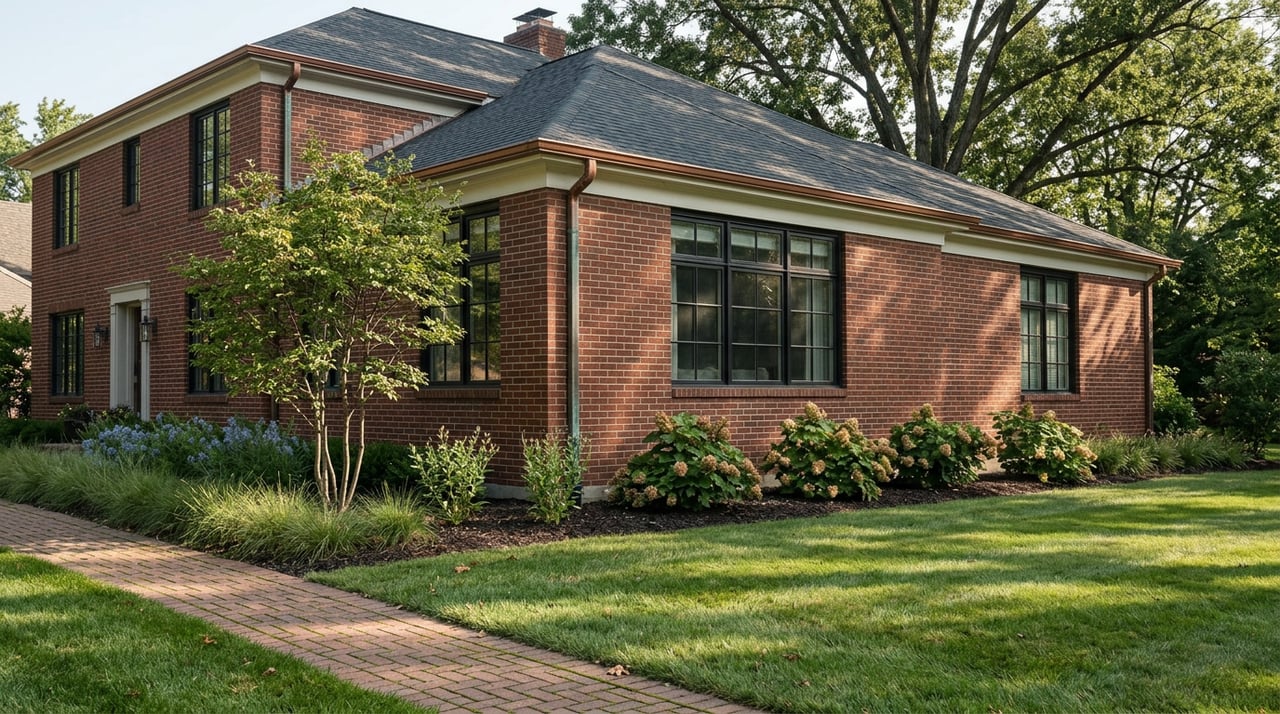
Here is the split hiding inside Winnetka's price statistics. On one end, a private equity executive is building a 68,000-square-foot compound on Sheridan Road. On the other, most buyers are competing for homes under 3,000 square feet on quarter-acre lots a few blocks from downtown. Both get folded into the same Winnetka price statistics.
The scale of the outlier end is worth sitting with. Justin Ishbia, the Shore Capital Partners executive reported to be in line to become majority owner of the Chicago White Sox, spent $33.7 million buying three adjacent lakefront properties and expects to spend another $43.7 million building on them, a combined project north of $77 million. A few doors down, Shiraz and Vijay Kotte demolished the historic Clement Stone Mansion, a 1912 Spanish Revival estate built by socialite and real estate investor Lena P. Gilmore, and are replacing it with a 28,690-square-foot new build carrying a $10 million construction budget. The village's two largest recorded home sales, both north of $30 million, both closed within the past year: a $31.25 million deal in September 2025 followed two months later by a $32.5 million off-market sale on November 19, a new high for the Chicago market.
None of that activity looks anything like what a family moving up from a 3-bedroom in Wilmette or Glenview will actually shop for. The village-wide median does not distinguish between homes by square footage or buyer intent. That single figure does not show the differences between those markets.
"It's extremely hard to find land to build on," Dena Fox, an agent with the Rubenstein Fox Team at Baird & Warner, told The Real Deal.
Her point is really about scarcity, not price. When the same handful of highly capitalized buyers assemble adjoining lots for years-long builds, that land leaves the market entirely, sometimes for a decade, tightening supply for everyone else while barely registering as inventory turnover.
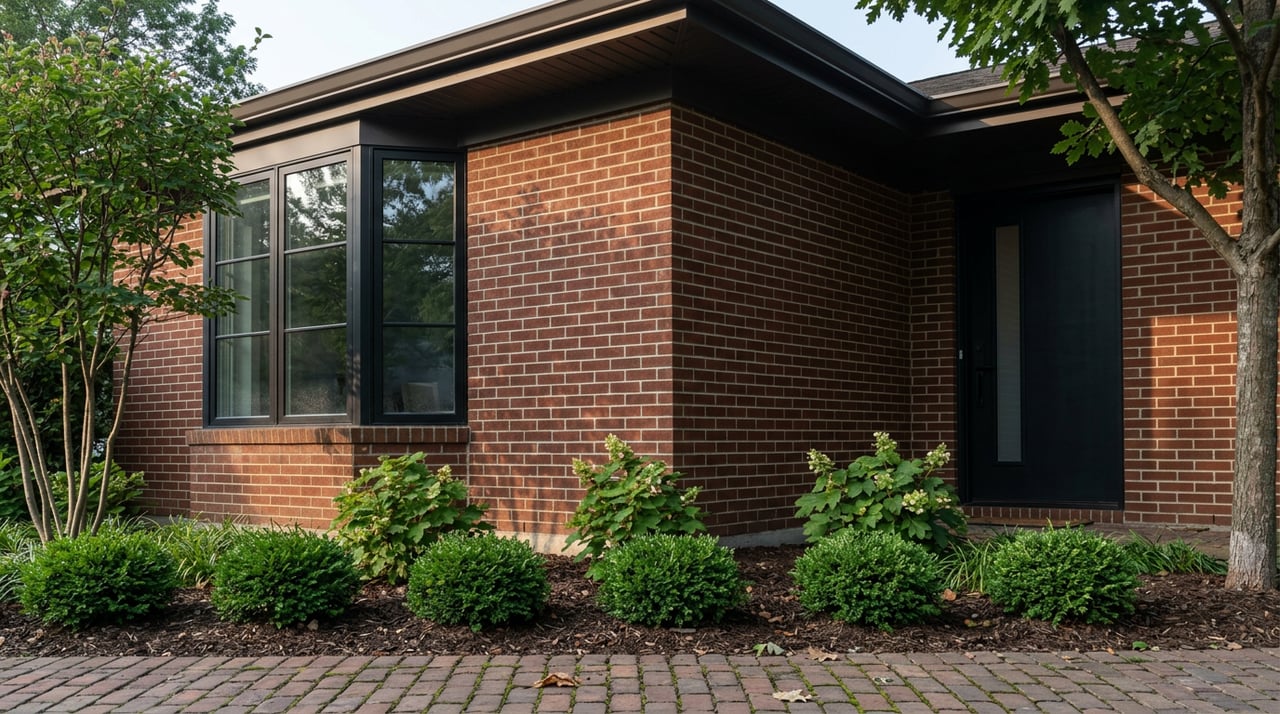
Strip out the compound-building tier and the market that most readers of this post will actually compete in looks considerably more modest, even if it is still expensive by almost any national standard.
| Market segment | Approximate price range | What defines it |
|---|---|---|
| Lot-assembly megamansions | $30M and up | Multiple adjacent lakefront parcels combined, custom-built, often sold off-market |
| Sheridan Road corridor rebuilds | $10M to $17M | Single-lot teardown and rebuild on lakefront lots, still headline-generating but not record-setting |
| New construction, non-lakefront | Roughly $1.6M | The realistic ceiling for most move-up buyers shopping new builds village-wide |
| Resale single-family, broad market | High $900Ks to $2.8M | Where the bulk of Winnetka's roughly 20 active single-family listings sat as of late July 2026 |
As of March 2026, the village-wide median sale price sat at $1.7 million, up 7 percent from a year earlier, with price per square foot around $549, up nearly 9 percent. Over the trailing twelve months, the median climbed further to roughly $1.82 million, an 11 percent increase. Those numbers are accurate. They are also a snapshot of a market where a $17 million rebuild and a $999,000 three-bedroom on Provident Avenue are treated as data points of equal weight.
The practical consequence for a buyer is this: if you are shopping in the $1 million to $2 million range, which describes most of the village's active resale inventory, you are not competing against Justin Ishbia's contractors. You are competing against roughly 20 other listed single-family homes at any given time, in a market Redfin scores as highly competitive, with homes typically fetching multiple offers and selling in under a month. That is a real, tight market. It is just a different tight market than the median implies.
If the median price pushes buyers toward assuming Winnetka is uniformly out of reach, the attached-housing numbers close the door from another direction. Winnetka's housing stock is overwhelmingly single-family by design, and the condo market reflects it starkly. As recently as mid-April 2026, only one condo was listed for sale in the entire village. That is not a temporary dip. It is a structural feature of a community built almost entirely around single-family zoning districts, with no meaningful pipeline of new attached product to replace what little exists.
For downsizers hoping to trade a large lot for something smaller without leaving Winnetka, that scarcity matters more than any price trend. There is functionally no inventory to downsize into. Buyers in that position typically end up choosing between an older, smaller single-family home on a compact lot, a move to a neighboring suburb with more attached housing stock, or waiting for whatever comes out of the village's current zoning conversation.
That conversation is not hypothetical. On July 21, 2026, Winnetka's Village Council began work on the first full rewrite of its zoning ordinance since 1996, a code that has been patched more than 60 times since then and, according to Community Development Director Scott Mangum, may contain provisions dating back to the 1920s. The current ordinance still technically allows coal facilities and sheet metal shops as by-right uses, a detail that says less about heavy industry moving into Winnetka and more about how long it has been since anyone rewrote the rulebook from scratch.
The timeline moves fast by municipal standards. The Winnetka Plan Commission is expected to hold a public hearing on a new open-space zoning district in September 2026, with a possible Village Council vote as early as October if that hearing wraps in one session. The broader rewrite, covering the residential districts that determine what can be torn down, subdivided, or built where, is projected to take another 18 to 24 months after that.
Layered on top of the zoning rewrite is a 2024 ordinance restricting construction on or near the Lake Michigan bluff, widely viewed as a response to Ishbia's original megamansion plans. That rule became its own flashpoint. The Kottes were among a group of lakefront owners who sued the village over it, arguing it stripped millions of dollars from their property values, before dropping the litigation in December 2025, months after winning approval for their own new build.
None of this changes what closes today. It does mean that a buyer or seller planning a purchase, teardown, or long-term hold in Winnetka over the next two years is operating under rules that are actively being rewritten, in real time, by the same Village Council that will decide how the open-space and residential districts eventually look.
For a move-up family, the takeaway is not that Winnetka is unaffordable. It is that the median price is the wrong benchmark. The market you'll compete in, likely the roughly 20 single-family listings active at any given time in the $1 million to $2.8 million band, behaves more like a fast-moving, multiple-offer market than the number on a portal suggests, and it is largely disconnected from the lakefront compound activity generating the headlines.
For a downsizer, the honest answer is that Winnetka currently offers almost no attached-housing alternative, and that is unlikely to change before the zoning rewrite runs its course over the next two years.
For anyone selling a lakefront or near-lakefront lot, the 2024 bluff ordinance and the pending zoning rewrite are not background noise. They directly affect what a buyer can build, and therefore what your lot is actually worth to the kind of buyer currently active in that tier.
Does the megamansion activity mean Winnetka is overpriced for everyone? No. It means the village-wide median can obscure the differences between a small number of extremely high-dollar transactions and the broader single-family market. The broader single-family market, where most buyers compete, still runs at a premium to neighboring North Shore suburbs but behaves more like a normal, competitive market than the headline median suggests.
Will the zoning rewrite affect homes that already exist? Village officials have said the rewrite is not intended to change existing operational rights for current uses, but it will govern what future construction, subdivision, and special-use approvals look like, particularly near open space, parks, and school properties.
Are there any condos coming to Winnetka? Nothing specific is in the current zoning conversation. Given how thin existing attached-housing inventory is, any change would likely come out of the broader residential zoning rewrite still 18 to 24 months out.
Numbers like these only mean something when someone who watches this market daily can tell you which transactions are setting the trend and which ones are just noise. That is the work the Geoff Brown Team does for buyers and sellers across Winnetka and the North Shore every day. If you're trying to figure out what your Winnetka home is actually worth in this split market, or what you can realistically compete for as a buyer, get a Free Home Valuation and start with numbers built for your specific street, not the village-wide median.
This article is general information, not legal, tax or financial advice. Consult a qualified professional about your situation.
Stay up to date on the latest real estate trends.
With personalized strategies and unmatched local insight, the Geoff Brown Team ensures every client’s transaction is smooth, successful, and stress-free.